


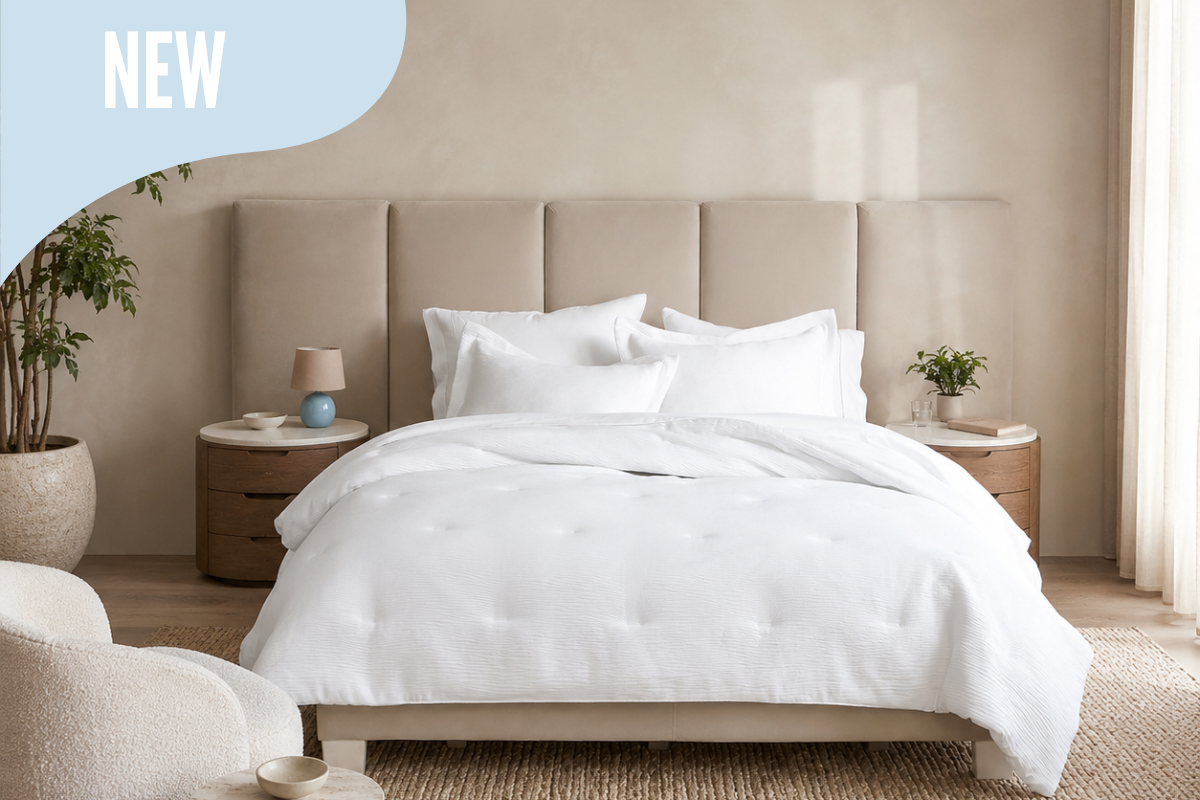


Thread Count Is a Scam. Here's What Actually Matters.
Walk into any big box store and you'll see it plastered everywhere. 800 thread count. 1,200 thread count. 1,800 thread count. The numbers keep climbing, the prices keep climbing with them, and somewhere along the way we all just accepted that higher = better.
It doesn't.
Thread count is one of the most effective pieces of marketing mythology in the home goods industry — and once you understand how it works, you'll never look at a sheet tag the same way again.
How Thread Count Actually Works (And Where It Gets Weird)
Thread count measures the number of threads woven per square inch of fabric — horizontal (weft) threads plus vertical (warp) threads. A basic weave with 200 threads in each direction gives you a 400 thread count. Makes sense, right?
Here's where the industry gets creative.
Some manufacturers use multi-ply threads — essentially twisting two, three, or four thinner threads together and counting each strand individually. So a fabric that's physically no denser than a 300 thread count sheet gets labelled as 900 or 1,200. You're not getting more fabric. You're getting more marketing.
The result? A heavier, often less breathable sheet that costs twice as much and performs worse — especially if you sleep hot.
The Ceiling Nobody Talks About
Here's a number the bedding industry doesn't love: 600.
Most textile experts and independent labs agree that beyond roughly 400–600 threads per square inch, you physically can't add more threads without compromising the weave. The fabric gets too dense, traps heat, and actually gets less comfortable over time.
The sheets sitting at 1,500 or 2,000 thread count? The math doesn't work without multi-ply counting tricks. It's not a lie exactly — but it's not what you think it is.
So What Actually Makes Sheets Feel Amazing?
Three things matter more than thread count:
1. The fiber itself. What the yarn is made of determines softness, breathability, and durability far more than how many threads are counted. High-quality microfiber, for example, is engineered at the fiber level to be buttery soft and temperature-regulating — properties that cotton at any thread count simply can't match for hot sleepers.
2. The weave. Percale weaves are crisp and cool. Sateen weaves are silky and warm. Neither is objectively better — but both matter more than the number on the tag.
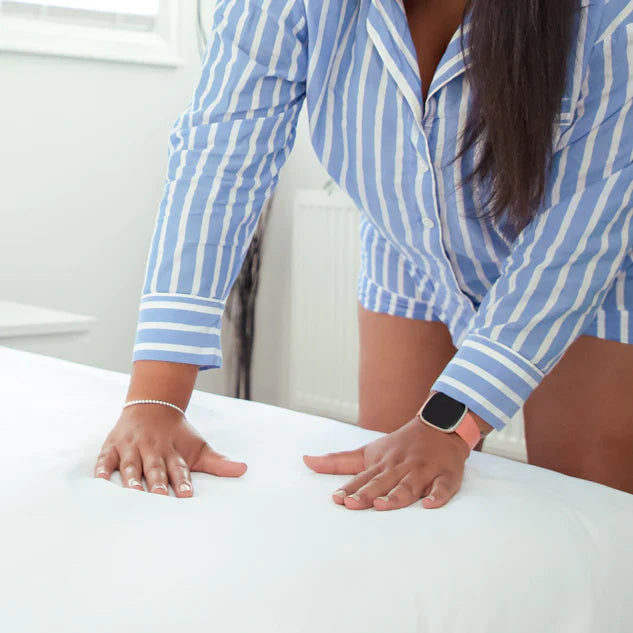
3. The finish. Double-brushed microfiber goes through a process that lifts the fibers to create that soft, almost velvety feel. It's a manufacturing technique, not a thread count trick.
What We Did Instead
When we started Benji Sleep, we were frustrated by exactly this. We'd buy sheets based on the big number on the packaging, spend good money, and end up with something stiff, hot, and somehow worse than the cheaper option next to it.
So we went looking for a better answer.
What we found was a high-performance microfiber engineered to 1,500 threads per square inch — not through multi-ply tricks, but through the actual construction of the fiber. The result is a sheet that's legitimately, embarrassingly soft. Temperature-regulating. Sweat-wicking. Hypoallergenic.
And without a retailer markup stacked on top, it costs a fraction of what you'd pay for a comparable product in a store.
No confusing thread count arms race. No inflated numbers to justify inflated prices. Just sheets that feel incredible — and let you actually sleep.
The Bottom Line
Next time you're shopping for sheets, ignore the big number on the front of the package. Ask instead:
- What is the fabric actually made of?
- How is it constructed?
- Does it regulate temperature, or will I wake up sweaty?
- Is there a trial period so I can actually test it?
Those questions will serve you way better than chasing a thread count that's been engineered to sound impressive.
If you want to see what that looks like in practice, our Sheet Sets come with a 100-night sleep trial. Try them. If they're not the softest sheets you've ever slept on, send them back.
We're that confident.


Laisser un commentaire
Tous les commentaires sont modérés avant d'être publiés.
Ce site est protégé par hCaptcha, et la Politique de confidentialité et les Conditions de service de hCaptcha s’appliquent.