


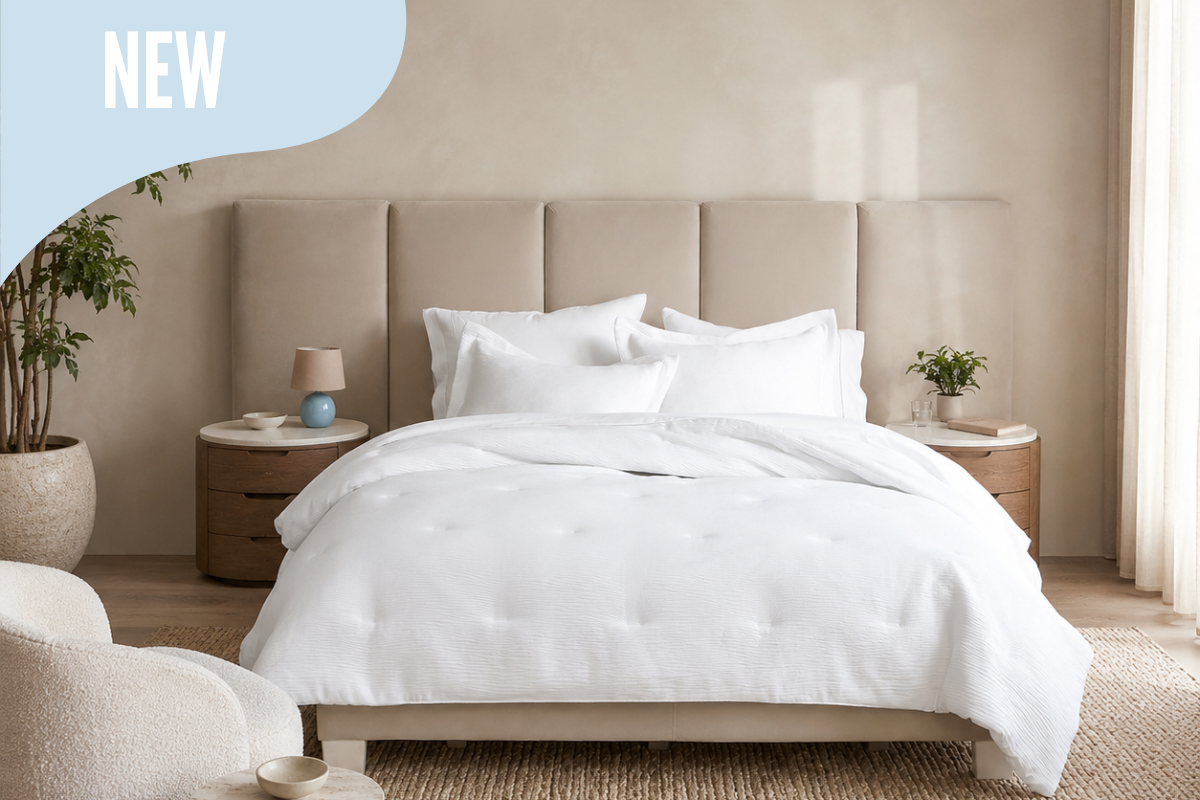


Duvet Covers, Explained: The Only Guide Canadians Actually Need
If you’ve ever stood in a bedding aisle (or scrolled through one online) and thought “what exactly is a duvet cover, and do I even need one?” — you’re not alone. Duvet covers are one of those products that seem simple until you start shopping and realise there are about forty different fabrics, closures, thread counts, and sizes to navigate.
This guide cuts through all of it. We’ll cover what a duvet cover actually does, how it’s different from a comforter, which fabric is right for your sleep style, how Canadian sizing works, and how to take care of the thing once you’ve bought it. No jargon. No filler. Just the stuff that actually helps you sleep better.
What Is a Duvet Cover (and Do You Actually Need One)?
A duvet cover is essentially a protective shell for your duvet insert — think of it like a pillowcase for your comforter. It’s a two-layer fabric envelope with a closure (zipper, buttons, or ties) that your duvet slides into.
It does three jobs at once: it protects your duvet insert from sweat, body oils, and general wear so you don’t have to wash or dry-clean the insert itself. It gives you a way to change your bedroom’s look without buying a whole new comforter. And, depending on the fabric, it can significantly change how your bedding feels and performs — softer, cooler, smoother, or warmer.
Do you need one? If you own a duvet insert: yes, absolutely. Without a cover, your insert is absorbing everything your body produces overnight, and most inserts are difficult or impossible to wash at home. A cover is the single most practical piece of bedding you can buy.
Duvet Cover vs. Comforter: What’s the Difference?
This is the question that confuses most Canadians, because retailers use the terms inconsistently. Here’s the simple version:
A comforter is a single, quilted blanket with fill sewn directly inside. It’s meant to be used as-is — no cover required. You wash the whole thing. It comes in a fixed colour or pattern.
A duvet (also called a duvet insert) is a plain, typically white, fill-only blanket designed to go inside a cover. The cover is what you see, feel, and wash regularly. The insert stays protected and lasts years.
The duvet-and-cover system is more popular in Canada and Europe because it’s more practical for our climate. You can swap covers seasonally (a crisp cotton for summer, a heavier fabric for winter) while keeping the same insert. You can wash the cover weekly with your sheets. And you can change your bedroom’s entire look for $100 instead of $300.
The downside? You have to stuff the insert into the cover, which is mildly annoying until you learn the burrito method (more on that later). Most people agree the trade-off is worth it.
Duvet Cover Fabrics: Which One’s Right for You?
The fabric of your duvet cover determines how it feels against your skin, how warm or cool you sleep, whether it wrinkles, and how long it lasts. Here’s what you’re choosing between in the Canadian market:
|
Fabric |
Feel |
Cooling? |
Wrinkles? |
Price Range |
|
Cotton Percale |
Crisp, matte |
Good |
Yes |
$$–$$$ |
|
Cotton Sateen |
Silky, smooth |
Moderate |
Less |
$$–$$$ |
|
Linen |
Textured, relaxed |
Excellent |
Very much |
$$$–$$$$ |
|
Performance Microfiber |
Ultra-soft, brushed |
Excellent |
No |
$–$$ |
|
Bamboo / Tencel |
Cool, silky |
Good |
Moderate |
$$–$$$ |
Cotton Percale
The classic hotel-sheet feel. Percale is a plain weave that produces a crisp, cool, matte-finish fabric. It breathes well and tends to sleep cool, which makes it a solid choice for warm sleepers. The trade-off is that percale wrinkles noticeably — if you care about a perfectly smooth bed, you’ll either be ironing or accepting the lived-in look.
Cotton Sateen
Sateen uses a satin weave that gives the fabric a subtle sheen and a smoother, silkier hand feel. It’s less breathable than percale but warmer, which can be a plus in Canadian winters. Wrinkles less than percale, drapes better, and looks more “luxury” right out of the package.
Linen
Linen is the darling of the design-blog crowd, and for good reason — it’s incredibly breathable, naturally temperature-regulating, and develops a beautiful softness over time. But it’s expensive, it wrinkles like crazy, and the first few washes can feel coarse. It’s a long-game fabric: amazing after six months, divisive on day one.
Performance Microfiber
This is where the industry has evolved the most in recent years. Modern double-brushed performance microfiber is nothing like the cheap, plasticky stuff from a decade ago. The best versions are ultra-soft from the first night, naturally wrinkle-free, moisture-wicking, and quick-drying. They also tend to be hypoallergenic and antimicrobial — a genuine advantage if you deal with allergies or sensitive skin.
Our Duvet Cover Set is built from double-brushed performance microfiber with 1,500 threads per square inch. It’s cooling, sweat-wicking, wrinkle-free, and hypoallergenic — basically everything you’d want in a duvet cover without the drawbacks of cotton or linen.
Bamboo / Tencel
Plant-derived fabrics (bamboo viscose, Tencel / lyocell) offer a silky feel and good temperature regulation. They’re a solid eco-conscious choice, but they tend to be more fragile than cotton or microfiber and can pill if you’re not careful with washing.
Does Thread Count Matter for Duvet Covers?
Sort of — but not the way most people think.
Thread count measures the number of threads per square inch of fabric. In cotton, higher thread counts generally correlate with smoother, denser fabric. A 200 TC percale is a solid everyday weight; a 400 TC sateen feels noticeably smoother. Beyond 600 TC, you’re usually paying for marketing rather than quality, since manufacturers use multi-ply yarns to inflate the number without improving the fabric.
For microfiber, thread count works differently. Microfiber threads are significantly finer than cotton threads, so you can pack far more of them into the same square inch. A 1,500 TPI (threads per square inch) microfiber is dense, smooth, and luxuriously soft — but it’s not directly comparable to 1,500 TC cotton, because the fibres and measurement standards are fundamentally different.
The bottom line: thread count is a useful shortcut within a fabric type, but it’s not meaningful across fabric types. A 1,500 TPI microfiber and a 300 TC cotton can both be excellent — they just feel different.
Duvet Cover Sizes in Canada
Canadian bed sizes are standardised, but duvet cover dimensions vary slightly between brands. A duvet cover should be close to the dimensions of your insert — ideally within 1–2 inches on each side. Too small and the insert buckles; too large and it swims around inside the cover.
Here’s the standard Canadian sizing for Benji duvet covers:
|
Bed Size |
Mattress (inches) |
Duvet Cover |
Benji Price |
|
Twin XL |
39” × 80” |
68” × 90” |
$100 |
|
Full / Double |
54” × 75” |
80” × 90” |
$110 |
|
Queen |
60” × 80” |
90” × 90” |
$110 |
|
King |
76” × 80” |
104” × 90” |
$115 |
Pro tip: if you’re upgrading from a queen to a king mattress, don’t try to use your old queen duvet cover on a king bed. The cover will be 14 inches too narrow, and it’ll look (and feel) like you’re sharing a beach towel. Invest in the right size — the price difference between queen and king is typically only $5–15.
What to Look for When Buying a Duvet Cover
Closure Type
Your options are usually a zipper, buttons, or an envelope fold. Zippers are the most secure — they keep the insert from sliding out and make stuffing easier. Buttons look cleaner but can come undone overnight. Envelope closures are simple but provide the least security. For ease of use, a hidden zipper is the best option.
Corner Ties or Loops
This is a non-negotiable. Interior corner ties (or loops that attach to your insert) keep the duvet from bunching, shifting, or ending up in a wad at the bottom of the cover. If a duvet cover doesn’t have corner ties, skip it. Every Benji duvet cover includes corner ties as standard.
Cooling and Moisture-Wicking Properties
If you sleep hot — and in Canada, many people overheat in winter because they’re layering heavy blankets in an already-heated bedroom — look for a duvet cover with active cooling or moisture-wicking properties. Performance microfiber excels here because it pulls sweat away from the body and lets it evaporate, rather than absorbing it the way cotton does. This is the difference between waking up cool and dry versus waking up clammy.
Wrinkle Resistance
This matters more than most people admit. A beautiful duvet cover that looks like a crumpled grocery bag after one wash isn’t going to make your bedroom look better. Cotton percale and linen both wrinkle heavily. Sateen is better. Performance microfiber is essentially wrinkle-free, which means your bed looks put-together every morning with zero effort.
OEKO-TEX Certification
OEKO-TEX Standard 100 tests textiles for over 350 harmful substances, including formaldehyde, heavy metals, and allergenic dyes. It’s especially worth looking for if you have sensitive skin, eczema, or allergies. Our Duvet Cover Set is OEKO-TEX Standard 100 certified.
Best Duvet Covers for Hot Sleepers in Canada
If you’re a hot sleeper, your duvet cover fabric matters as much as your insert weight. Here’s what to prioritise:
Sweat-wicking fabric. Cotton absorbs moisture and holds it, which can leave you sleeping in damp fabric. Performance microfiber and bamboo wick moisture away from the body so it can evaporate, keeping the surface drier.
Temperature regulation. Look for covers specifically designed to regulate body temperature rather than trap heat. This is where performance fabrics have a real edge over traditional cotton.
Lighter insert pairing. Your duvet cover is only half the equation. Pair a cooling cover with a lightweight or all-season duvet insert. A heavy winter-weight down duvet inside any cover will sleep hot.
Our Duvet Cover Set was designed specifically for this problem. The performance microfiber is sweat-wicking and temperature-regulating, so you get a cover that actively works to keep you cool and dry instead of just passively sitting there.
How to Care for Your Duvet Cover
Wash frequency. Wash your duvet cover every 1–2 weeks, the same schedule as your sheets. Your face and body press directly against it for 7–8 hours a night — it accumulates sweat, oils, and dead skin cells faster than you’d think.
Water temperature. Warm water for regular washes. Hot water for a periodic deep clean (once a month is fine). Avoid hot water on every wash — it can break down fibres and fade colours over time.
Drying. Tumble dry on low or medium heat. Over-drying is the fastest way to degrade any fabric. If your cover is performance microfiber, it’ll dry significantly faster than cotton or linen — which saves energy and time.
Skip the fabric softener. Just like with towels, fabric softener coats fibres with a waxy residue that reduces breathability and moisture-wicking performance. If your cover feels stiff, add a splash of white vinegar to the rinse cycle instead.
The burrito method for stuffing. Turn the cover inside out. Lay it flat on the bed. Lay the insert on top, aligned at the corners. Roll both layers together from the closed end to the open end (like a burrito). Once rolled, reach inside the cover opening and flip the fabric right-side-out over the roll. Unroll, button or zip closed, and shake. Done in 90 seconds.
The Duvet Cover Buying Cheat Sheet
If you’re skimming, here’s everything that matters in one place:
Choose your fabric based on sleep temperature: performance microfiber or bamboo for hot sleepers; sateen or flannel for cold sleepers; percale for a cool, crisp classic.
Get the right size. Measure your insert. Your cover should be within 1–2 inches on each side.
Corner ties are non-negotiable. Without them, your insert will bunch. Every single time.
Look for OEKO-TEX Standard 100 if you care about what’s touching your skin for 8 hours a night.
Wrinkle-free matters more than you think. A cover that looks great without ironing is a cover you’ll actually enjoy using.
Skip the fabric softener. Vinegar. Always vinegar.
Ready to Upgrade Your Duvet Cover?
Our Duvet Cover Set comes with a duvet cover and 2 pillow shams (1 for Twin XL), in 12 colours including solids and patterns. 1,500 TPI double-brushed microfiber. Cooling. Sweat-wicking. Wrinkle-free. Hypoallergenic. OEKO-TEX Standard 100 certified. Corner ties included.
Available in Twin XL, Full/Double, Queen, and King. Starting at $100 CAD. Free shipping across Canada on orders over $150, and backed by our 100-Night Trial.
200,000+ Canadians already sleep with Benji. Your duvet deserves the upgrade too.


Leave a comment
All comments are moderated before being published.
This site is protected by hCaptcha and the hCaptcha Privacy Policy and Terms of Service apply.